Pages

Saturday, April 16, 2016

Free Download Photoscape


Link Download : (Download)


PhotoScape is a free software that you can use to manage and enhance your photos or images. Besides offering features the "basics" such as regulators contrast (dark or light) or sharpen (to sharpen the colors in the photo), Photoscape can also be used to add a frame (frame) on the photo. There are dozens of types of frames to choose from.
You can also combine or unite with Photoscape this photo. You just drag and drop the photos you want to merge and resize the image if necessary. In addition to the comprehensive features PhotoScape also has a display that is easily understood by the user. Many people are praising this software for its ability to edit images and photos.
Read More..

Friday, April 15, 2016

18 Numeros Lotofacil Garantia de 14 Pontos 1312 Watch

geby21.blogspot.com - concurso 1312 lotofacil. Inscreva-se no canal, sempre com conteúdo da lotofácil deixe aquele like cabuloso ;) que só você Lotofácil Resultado O valor estimado premio principal (15 acertos) pode variar em funça da quantidade de acertadores dos premios fixos (11, 12 13 acertos) 18 Numeros Lotofacil Garantia de 14 Pontos 1312
Read more »
Read More..

Thursday, April 14, 2016

The UK’s “best workplace” just got better with Google Apps for Work


Editors note: Today we hear from Jason Stockwood, CEO of Simply Business, the UK’s biggest business insurance provider and the top-ranked company on The Sunday Times’ list of 100 Best Companies to Work For in 2015. See how Google Apps strengthens the Simply Business team’s valued company culture and gives employees the freedom to explore new ways of working.
Jason Stockwood, Simply Business CEO

Working at five online companies in the last 15 years has taught me that a company’s culture resonates in all things that it does, and that an attractive internal culture will ultimately attract customers as much as it attracts talent. So when our systems administrator, Martin Golder, proposed that we switch Simply Business to Google Apps for Work, I needed to understand how the change would affect our company culture, and feel confident it would have a positive effect on both our people and our business.
Martin Golder, Simply Business Systems Administrator

I quickly gained that confidence as I tested Google Apps out for myself. Gmail and Calendar transformed my work in ways I hadnt expected. For example, over the past twenty years, I’d created a complicated, time-consuming filing system for my email, but I gave it up as I discovered Gmail’s incredibly powerful search function. And the ability to log into a web browser and have full use of my account without going through clunky webmail servers was massively impactful.

Then there was the financial bonus: it cost us £26,000 to implement Google Apps for Work, less than half the price of its competitors.

With our pilot complete and our decision made, we rolled out Google Apps for Work in March with help from Cloud Technology Solutions and a group of our own production champions, including both myself and the staff of our contact centre in Northampton. The buzz that evangelists created really pulled everyone on board, and when we finished our full deployment in May, we could rely entirely on the product champions to step in when questions came up from people across the team.

The time and cost savings of Google Apps goes far beyond the deployment. Our IT team no longer wastes four hours a week maintaining our old email servers, which translates to over £4,000 a year that goes back to the business. They also spend 70 percent less time on helpdesk requests. And the wider team saves nearly 20 minutes each meeting merely by replacing our old meeting room booking process — using phones around the office to check availability of a room — with Calendar.

Using simple but powerful work tools gives our staff the freedom to create new ways to be efficient for our customers. At our Northampton contact centre, two hundred of our staff speak directly to customers every day. In the past, they would take a query, put the customer on hold, ring around to find someone who could help, then go back to the call. Now they use Hangouts to ping each other while customers share their queries, comments and concerns, which is simpler and faster and doesn’t put anyone on hold. The System Administration team, split between London and Northampton, also uses Hangouts for daily discussions, while remote consultants use Hangouts for weekly tech tutorials by streaming video through a Chromebox-linked projector in London.

One month after the rollout, we used Google Forms to survey staff reactions to the new system, and received an overwhelmingly positive response. More than two hundred of our staff have already started to use Drive of their own accord, and next year we’ll make the transition official by moving all of our 1.25 terabytes of files and secure spreadsheets onto the cloud. My advice to anyone considering the switch to Google Apps for Work is just to try it out. You’ll see the benefits immediately. It’s a new, lighter, easier way of working.
Read More..

Announcing 100 000 for Startups on Google Cloud Platform

This post originally appeared on the Google Cloud Platform blog 
by Julie Pearl, Director, Developer Relations

Today at the Google for Entrepreneurs Global Partner Summit, Urs Hölzle, Senior Vice President, Technical Infrastructure & Google Fellow announced Google Cloud Platform for Startups. This new program will help eligible early-stage startups take advantage of the cloud and get resources to quickly launch and scale their idea by receiving $100,000 in Cloud Platform credit, 24/7 support, and access to our technical solutions team.

This offer is available to startups around the world through top incubators, accelerators and investors. We are currently working with over 50 global partners to provide this offer to startups who have less than $5 million dollars in funding and have less than $500,000 in annual revenue. In addition, we will continue to add more partners over time.

This offer supports our core Google Cloud Platform philosophy: we want developers to focus on code; not worry about managing infrastructure. Starting today, startups can take advantage of this offer and begin using the same infrastructure platform we use at Google.

Thousands of startups have built successful applications on Google Cloud Platform and those applications have grown to serve tens of millions of users. It has been amazing to watch Snapchat send over 700 million photos and videos a day and Khan Academy teach millions of students. Another example, Headspace, is helping millions of people keep their minds healthier and happier using Cloud Platform for Startups. We look forward to helping the next generation of startups launch great products.

For more information on Google Cloud Platform for Startups, visit http://cloud.google.com/startups.

Posted by Katie Miller, Google Developer Platform Team
Read More..

How to check if the phone is connected to the Internet

to check whether your phone is connected to the Internet, use the following code:
ConnectivityManager con=(ConnectivityManager)getSystemService(Activity.CONNECTIVITY_SERVICE);
boolean wifi=con.getNetworkInfo(ConnectivityManager.TYPE_WIFI).isConnectedOrConnecting();
boolean internet=con.getNetworkInfo(ConnectivityManager.TYPE_MOBILE).isConnectedOrConnecting();

these lines check for internet connection whether it is through WiFi or Mobile Internet.

you need to add the following permission to the AndroidManifest.xml file
<uses-permission android_name="android.permission.ACCESS_NETWORK_STATE" />

Another method is what our freind Kevin mentioned in the comments, is to check if a certain website is reachable or not like this:
public static boolean isOnline() {
try {
InetAddress.getByName("google.ca").isReachable(3);
return true;
} catch (UnknownHostException e){
return false;
} catch (IOException e){
return false;
}
}

we check if a site is reachable within a certain timeout or not.
Read More..

Wednesday, April 13, 2016

Cameras in Phones what do we really need


An awful lot is being said about mobile phone cameras just lately; and we have HTC to thank for opening the conversation with the introduction of their HTC One which has half as many pixels at twice the size of anyone elses. Before we begin Im going to get some ground rules. I wont use marketing terms; so I will talk about how many pixels a camera sensor has, and what size they are. You wont hear me talking about mega- or ultra- anything. Next is that I will show my meaning with diagrams - Im a visual person and it helps me to explain. Please bear with me on this post; theres a lot to read but its worth it at the end.

A digital camera uses a lens to focus an image onto an oblong of special material which has a number of sensors on it; each sensor is called a pixel and usually contains three sub-pixels; a red, a blue (actually two blues but dont worry about that) and a green one. Each of these sends a signal to the camera depending how much light of that colour is falling onto it. Bigger pixels produce a bigger signal for the same amount of light than smaller ones. When signals are small, the amount of noise (erroneous signal levels produced simply by electrons moving around) is a bigger percentage of the whole signal because noise is a constant backdrop. When the signals are bigger therefore, its easier to pick out the signal, from the noise. More noise means that the signal produced by a smaller pixel is less accurate which means the final photo may not have exactly the same colour from each pixel receiving the same light.

Camera sensors line up their pixels in rows and columns - and the cameras rating is often quoted by counting them. For instance a 10MP camera contains ten million pixels (roughly). These are arranged in a rectangular grid with a side length ratio of 16:9 - so thats 4213 pixels across and 2370 pixels high. If you have a sensor which is 7mm across, each pixel is 7/4213=1.662 microns across (microns = thousandths of a millimetre).

In the real world, standard sensor sizes and pixel sizes exist; a 13 million pixel camera in a phone will have pixels about 1.1 microns across; this gives a sensor width of about 4.55mm (there are 4128 pixels across the image). In the HTC One, the best photos are 2688 pixels across, and the pixels are 2 microns across giving a sensor width of about 5.4mm.
Figure 1 - 4 million large pixels

Figure 2 - 8 million (smaller) pixels on same size sensor
Now we can start looking at construction. Take a look at Figure 1. This shows a camera with large pixels - the lens is focussing the image onto an area exactly the same size as the sensor. In Figure 2, we gave the camera more pixels (which really does give more detail in the image but at the expense of noise and grain - and also less sensitivity at low light levels). Of course; straight away you want more, BIGGER pixels. Figure 3 shows that if you make that happen, the image doesnt cover the whole sensor; the light falls on a little bit of it. So - in Figure 4 we move the sensor further away to ensure the image covers all the pixels.
Figure 3 - 8 million large pixels with no other changes

Figure 4 - Sensor moved away, but the lens size is unchanged.
However; the same amount of light, entering the lens, is now spread over a wider area: this dims the light hitting each individual pixel, which reduces the signal output and increases the noise. The only way to change this is to make the lens bigger - the aperture wider - so that more light gets in. This is shown finally in Figure 5.
Figure 5 - all required changes incorporated.
So - how far back do we have to move the lens? Simple trig shows us the answer. Imagine the "field of view" of the lens is about 60° (not unreasonable): the light coming in from the left and right cross over in the centre of the lens and make a triangle with the sensor as the base... an equilateral triangle is formed with all angles at 60° and all sides the same length (lets call it 5.4mm to stick with the HTC Ones sensor size). So the lens must be 2.7mm away from the sensor. If we now make the sensor an 8MP one (3800x2140 pixels) that gives a width of 7.6mm - the lens still has a viewing angle of 60° so that means the sensor has to be 3.8mm away from the lens. Obviously I have used 60° as the lens viewing angle because it makes the angles, sines and side lengths easy to calculate - the numbers are probably quite different in real life but you get the idea: to get double the megapixels you have to move the sensor further from the lens, which means you need a bigger lens to gather the light needed to adequately illuminate it. Lenses very rapidly increase in price with size - a lens 4mm across instead of 2mm might cost three or four times as much. (BTW - the large circular opening on the back of the phone is NOT the lens; the lens is the tiny dark speck in the centre of it).

In practical terms for a smartphone? This means that, to get an 8 million pixel camera, with pixels 2 microns across, your phone would need to be about 16-18mm thick (at least at the cameras location); and the phone would cost upwards of US$1000 - possibly even more - JUST because of the lens.

This isnt something which can be corrected with better design, or better lenses; the only way to mitigate this increase in size and cost would be to make smaller pixels which had the properties of larger ones - and that my friends is the nirvana of a pixel scientist! The very best technology available is going into these phones - and with todays tech were stuck with these limitations. In another article Ill talk about why I believe 4MP at 2 microns across is enough.


This article is also to be found on its author personal blog.

Have any questions or comments? Feel free to share! Also, if you like this article, please use the media sharing buttons (Twitter, G+, Facebook) under this post!
Read More..

Bass Booster Pro apk


Description

Please try the free version first to see if it works.
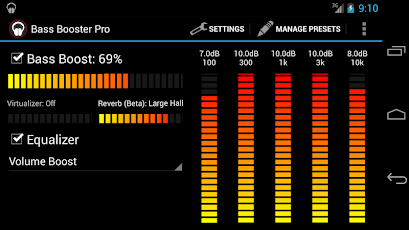
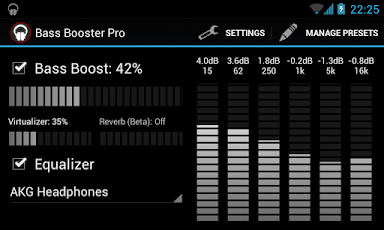
Bass Booster Pro is a standalone app, so you should uninstall the free version to avoid conflicts.The Pro features of Bass Booster include :
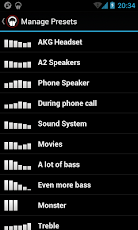
- Unlimited custom presets
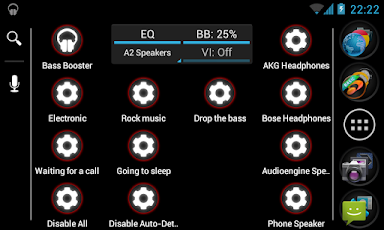
- Homescreen widget (2x1)
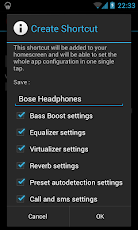
- Homescreen shortcut (see below)
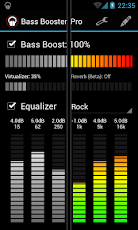
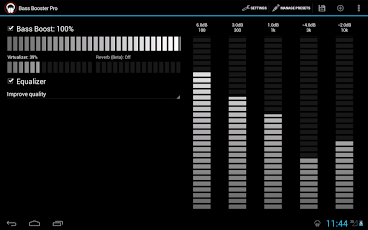
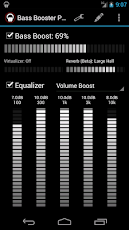
- Virtualizer
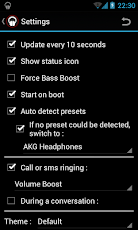
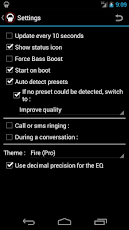
- Start on phone boot
- Preset auto-detection (see below)
- Automatic preset on incoming call/SMS or during phone conversations
- 4 themes
- Reverb (in Beta ! It doesnt work on most phones, so it might be removed)
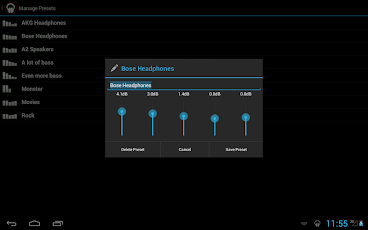
- 20 built-in presets : More Basses, Improve quality, Electro, Techno, Dubstep, Dance, Pop, Rock, Metal, Reggae, Rap, R&B, Hip-Hop, Jazz, Latino, Acoustic, Classical, Party, Voice Boost, Volume Boost. (included in the free version)

Homescreen Shortcut :
This feature allows you to create a 1x1 homescreen shortcut thatll change Bass Booster settings in one click without even opening the app ! (see screenshots)

Preset auto-detection :
This feature allows presets to be automatically adjusted according to the music that is being played. Lets say that youre listening to some Alternative Rock music, by default, Bass Booster will automatically choose the Rock preset, but if you create a custom "Rock" preset, yours will be selected.
But it goes even further ! For example, you could create a "Punk Rock" preset and a "Hard Rock" preset and they would be automatically selected. (Android 2.3.3+)
You can also create a preset specifically for a song, album or artist and it will be auto-detected next time you play a matching song. This is very useful for volume normalization among others.
Auto-detection requires to use :
- A compatible player
- Locally stored and tagged audio files
Players that support auto-detection :
- The stock player by Google
- Google Play Music
- Player Pro (recommended)
- JetAudio Player
- RealPlayer
- Poweramp
- Rocket Music Player
- NRG Player
- Music Folder Player
- MortPlayer
- TTPod Music Mod
- Meridian
- ³ (Cubed)
- DoubleTwist (enable Last.FM scrobbling in DoubleTwist)
- Winamp (enable Scrobbling and install the Last.FM app).
This list is not complete : other media players may work.
If your player doesnt work, try to enable Last.FM Scrobbling in the settings of your media player. For Winamp and some others players, you have to install Last.FM. It it still doesnt work, drop us a mail and well see if support can be added

Permissions :
- Receive messages : To automatically set a preset if theres an incoming SMS.
- Read phone state : To automatically set a preset if theres an incoming call.
- Read external storage : Needed for preset auto-detection on some devices

Disclaimer :
We are not responsible for anything that might happen to your phone, your audio device or yourself ! Do not listen at full volume or with bass boost for too long. This app can damage your devices or hearing. Use it wisely !
By downloading this application, you accept that in no case we could be held responsible for any kind of damage resulting of the use of this app in any way.
This software is provided by the copyright holders and contributors "as is" and any express or implied warranties, including, but not limited to, the implied warranties of merchantability and fitness for a particular purpose are disclaimed. In no event shall the copyright owner or contributors be liable for any direct, indirect, incidental, special, exemplary, or consequential damages (including, but not limited to, procurement of substitute goods or services; loss of use, data, or profits; or business interruption) however caused and on any theory of liability, whether in contract, strict liability, or tort (including negligence or otherwise) arising in any way out of the use of this software, even if advised of the possibility of such damage.

DOWNLOAD
Read More..